Lymphedema and edema
- Primary or secondary lymphedema
- Swelling after trauma, injury, or surgery
- Cancer-related lymphedema
- Lipedema and connective-tissue conditions
- Edema affecting mobility or daily routines
About our center
If persistent swelling or a wound that will not heal is limiting your day, you are in the right place. Our Southpointe team combines clinical expertise, practical education, and a plan built around your life.
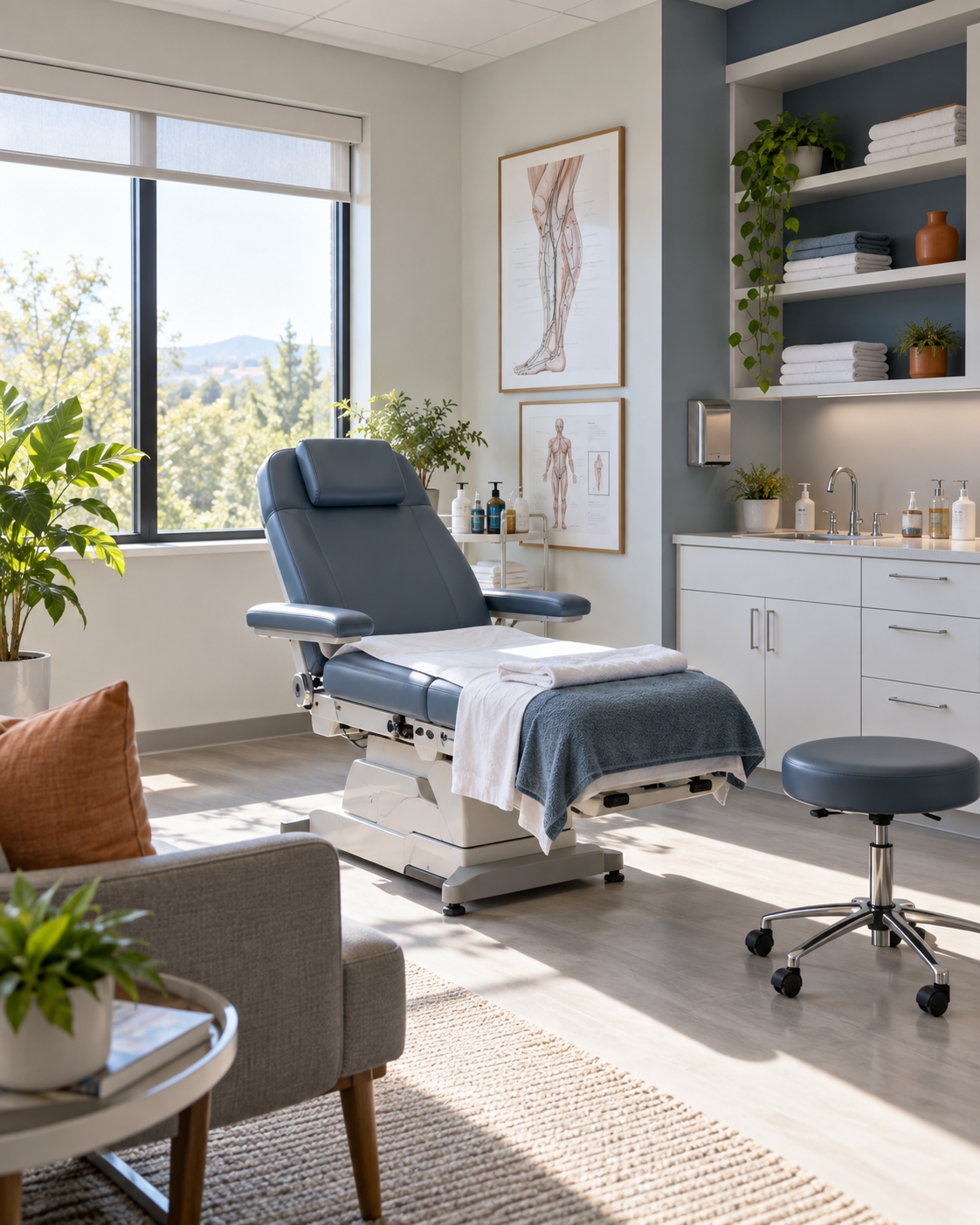
A reflection in the mirror
Maybe your shoes no longer fit the same. An arm feels heavy after surgery. A sore has lingered despite careful dressing changes. These are not problems you simply have to live around.
We care for people with primary and secondary lymphedema, edema after trauma or surgery, lipedema, and chronic or complex wounds. The first step is a thorough evaluation to understand what is slowing your progress and what can move it forward.
Sudden severe pain, fever with signs of infection, chest pain, trouble breathing, or rapidly spreading redness may require emergency care. Call 911 or go to the nearest emergency department.
Do I qualify?
You do not need to know exactly what treatment you need before calling. Tell us what is happening, and we will help you understand the next step.
We accept many major plans. Coverage, referrals, and prior authorization vary, so our team can help verify your benefits before treatment.
How we help
Your plan may combine treatment in the clinic with tools and routines you can use confidently at home.
Complete care to reduce swelling, protect skin, support movement, and help you maintain results.
A careful assessment of the wound and the health factors around it, followed by targeted treatment.
Healing lasts longer when you understand the why behind your plan and how to follow it safely.
What to expect
We make space to understand your history, answer questions, and define what progress should look like for you.
Tell us about your concern. We will discuss scheduling, insurance, and whether a referral may be needed.
We review your history, examine the affected area, take measurements, and learn what matters in your daily life.
Your clinician explains the recommended care, expected schedule, and the role you can play between visits.
We monitor progress, adapt the plan as you heal, and prepare you for long-term maintenance.
Our mission
We provide premium wound care and lymphedema services in a comfortable, innovative setting, with solutions tailored to individual needs.
The experience patients notice
Recent patient feedback consistently highlights a team that listens, explains, and takes time with each concern.
“Caring, thorough, and willing to make sure every concern is addressed.”
Patient feedback · Google review“A provider who listens and explains everything in a beautiful, welcoming center.”
Patient feedback · Google review“A responsive team that helped when a serious wound needed attention quickly.”
Patient feedback · Google reviewFrequently asked questions
Have a question not covered here? Call us and a member of the team will help.
It depends on your insurance plan. Some plans require a physician referral; others permit self-referral. We can help you check before scheduling.
Bring your insurance card, photo ID, medication list, relevant referrals or records, and any compression garments you currently use. Wear comfortable clothing that allows access to the affected area.
An initial evaluation often takes about 45–60 minutes so your clinician can complete a thorough assessment and discuss a treatment plan.
Many plans cover medical compression garments when prescribed, but benefits and limits vary. Our staff can help verify coverage and assist with documentation.
Manual lymphatic drainage is a gentle technique. Compression may feel unfamiliar at first, but treatment should not be painful. Tell your clinician about any discomfort so your plan can be adjusted.
Ready to begin?
Call to schedule an evaluation at our Southpointe office. We will help you understand what to bring and what your insurance may require.